

While researching corrosion under insulation (CUI), I recently came across the article A Review of Corrosion under Insulation: A Critical Issue in the Oil and Gas Industry.
The paper reinforces why CUI remains one of the most challenging degradation mechanisms to manage. Water ingress, operating temperature, insulation condition, coating performance, equipment design, and environmental exposure can all influence how corrosion initiates and progresses. Because corrosion develops beneath the insulation system, its extent is often difficult to assess through external visual inspection alone.
Removing insulation provides direct access to the metal surface, but applying this approach on a large scale is rarely practical. It involves labor-intensive work, insulation replacement, and, depending on the location, scaffolding, access arrangements, or operational constraints. As a result, inspections are usually limited to selected areas.
The real challenge is deciding where those areas should be.
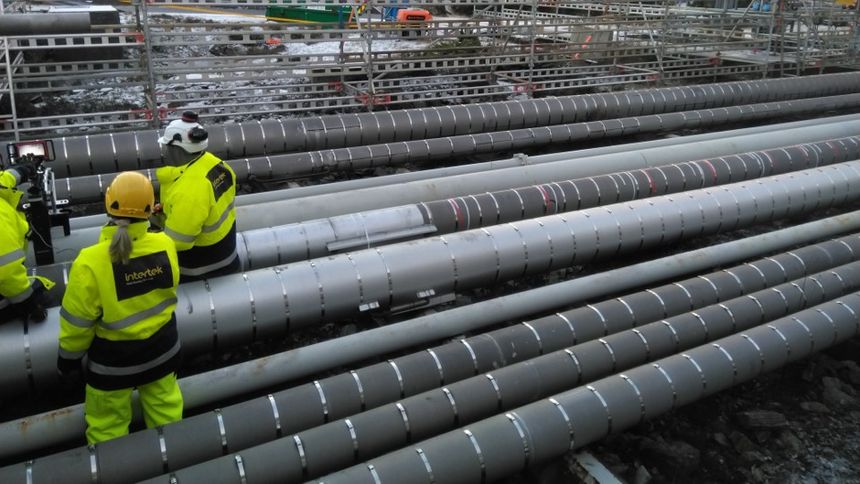
Screening technologies can support this decision-making process. Intertek's CUI screening solution uses real-time radiography (RTR) through OpenVision technology to generate live radiographic images of insulated piping without removing insulation, coatings, or external jacketing. The technique can reveal indications associated with corrosion, moisture ingress, ice accumulation, and internal deposits, providing information that helps identify areas requiring further investigation.
It is important to recognize that RTR is a screening tool, not a substitute for detailed inspection or wall-thickness measurement. Its purpose is to focus inspection efforts on the locations most likely to require attention and to support decisions regarding insulation removal.
The findings can then be evaluated alongside operating history, temperature profiles, coating condition, previous inspection data, and consequence-of-failure considerations. Where necessary, complementary inspection techniques can be applied to characterize and size the detected anomaly.
After reading the article and reviewing the inspection options available today, I came to a simple conclusion: the key question is not how much insulation can be removed, but whether inspection resources are being directed to the areas that matter most.
/Passle/69a9a5cfa0730380cf7deede/SearchServiceImages/2026-10-07-23-02-11-162-6ac6cf73fb51287ac2262fe7.jpg)
/Passle/69a9a5cfa0730380cf7deede/SearchServiceImages/2026-10-12-23-32-12-095-6acd6dfcc73178b1cd947e45.jpg)
/Passle/69a9a5cfa0730380cf7deede/SearchServiceImages/2026-10-07-12-09-06-256-6ac63662ba1af7c11804ddbb.jpg)