
When we first started using drones for inspections onshore several years ago we often faced the inevitable question, “But can you use them in the more exposed environment offshore?”. Drone manufacturers have taken on the feedback and come a long way in offshore deployment. Something I always considered as well was that the drones would be replacing the need for humans to dangle off ropes or scaffolding. You wouldn't have a human out there on ropes or scaffolding in severe weather. So you should compare like for like and assess the conditions a drone can operate in with the conditions a human would safely be expected to operate in. Then consider that it is the risk of working at heights you are eliminating, given the same weather conditions.
| less than a minute read
2026 Guide to Offshore Drone Inspections: Challenges, Regulations, and the Shift to Remote Offshore Surveys
Get in touch

Get in touch
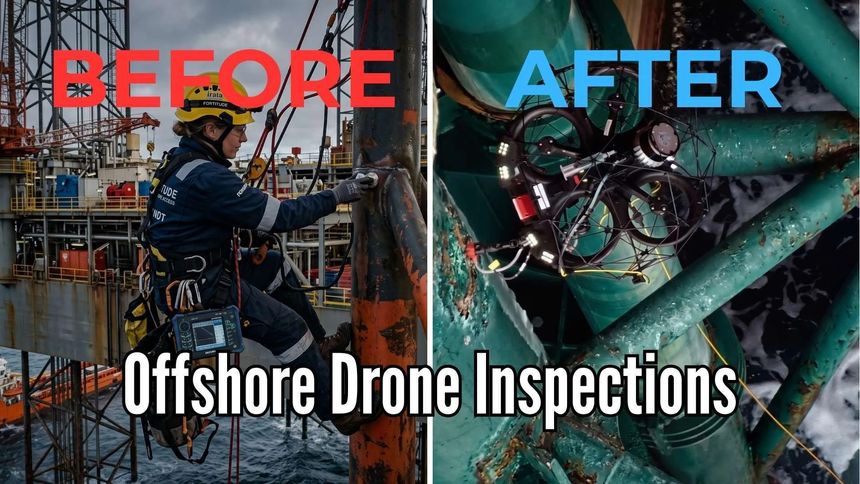
In the global energy and marine sectors, offshore inspections represent the vital operational baseline required to guarantee structural integrity, environmental safety, and regulatory compliance of all offshore structures. However, complex environmental conditions and limited physical access make inspection work complex. Traditionally relying on extensive scaffolding or rope access, while effective, these methods carry substantial financial burdens, long logistical lead times, and undeniable safety hazards.
Get in touch
Get in touch
/Passle/69a9a5cfa0730380cf7deede/SearchServiceImages/2026-10-06-13-14-13-489-6ac4f425a2651f39e10f4876.jpg)
/Passle/69a9a5cfa0730380cf7deede/SearchServiceImages/2026-09-22-06-36-07-234-6ab221d71b7ce479992b778d.jpg)
/Passle/69a9a5cfa0730380cf7deede/SearchServiceImages/2026-09-16-15-56-47-236-6aaabc3fc03416ab10a86994.jpg)