
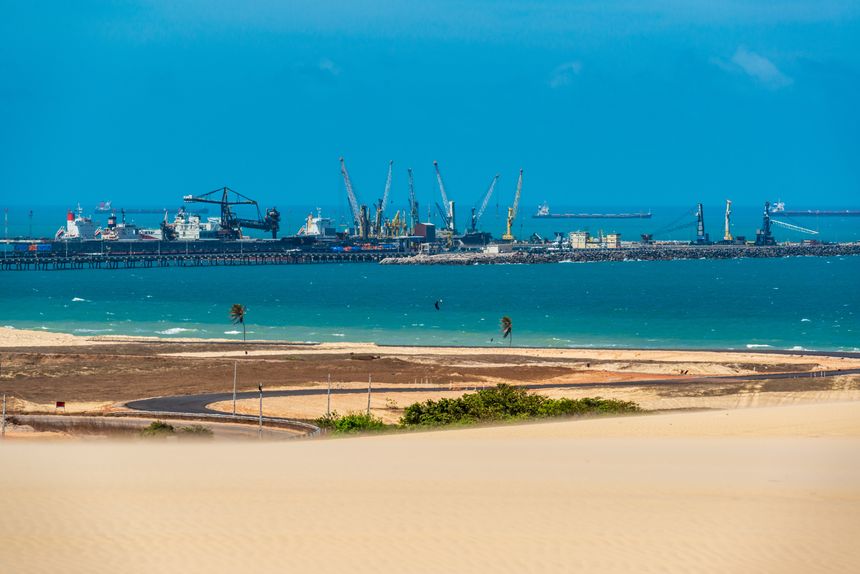

During a recent visit to the Pecém Industrial and Port Complex, I was impressed by how various infrastructure investments are beginning to connect.
On one side, a data centre for ByteDance, the parent company of TikTok, is under development, with an announced initial capacity of 300 MW. The project is expected to be supplied by renewable energy and to incorporate water-efficiency solutions, highlighting how the expansion of digital infrastructure is also increasing the demand for reliable and sustainable energy.
At the same time, the Dislub Equador Group is progressing with the development of a new tank farm in Pecém. With a reported investment of R$640 million and a planned capacity of 240,000 m³, the terminal is expected to expand the storage and handling of fuels, biofuels and chemical products in the region.
The future integration with the Transnordestina railway adds another dimension to this scenario. The rail connection could strengthen regional distribution, creating additional logistics options to serve Ceará and other states in Brazil’s Northeast.
What stands out is not only the scale of each project individually, but the potential integration between renewable energy, digital infrastructure, port operations, storage and rail.
Projects of this scale require long-term planning, technical governance and consistent oversight so that efficiency, safety, sustainability and regional development can advance together.
Pecém shows that the energy transition is not only about generating clean energy. It is also about building the infrastructure needed to connect that energy to the evolving demands of industry, logistics and the digital economy.
/Passle/69a9a5cfa0730380cf7deede/SearchServiceImages/2026-09-22-06-36-07-234-6ab221d71b7ce479992b778d.jpg)
/Passle/69a9a5cfa0730380cf7deede/SearchServiceImages/2026-09-16-15-56-47-236-6aaabc3fc03416ab10a86994.jpg)
