

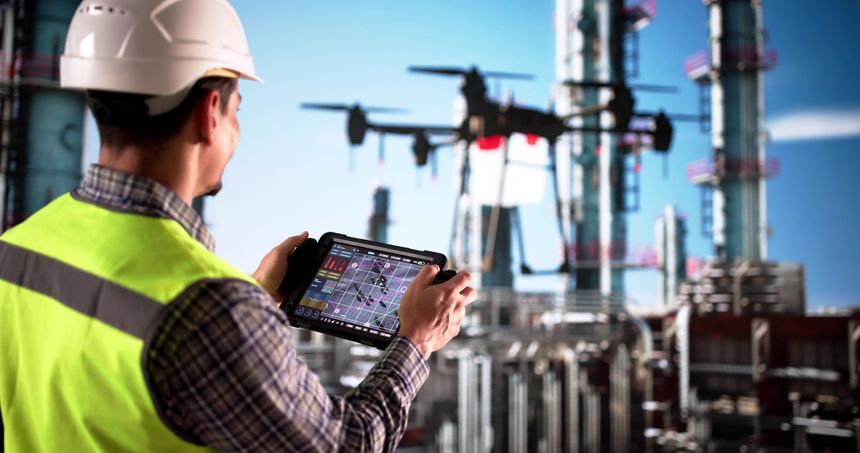
I recently revisited this 2024 article on the growth of drone-based ultrasonic inspection. Two years later, the topic is even more relevant.
Drones have been used in industrial inspections for years. What is changing is not simply the aircraft, but what we are now able to do with it.
The integration of technologies such as ultrasonic testing, high-resolution imaging, LiDAR and advanced data processing is turning drones into increasingly capable inspection platforms. Areas that once required scaffolding, rope access, shutdowns or significant personnel exposure can, in the right applications, now be assessed faster and with less operational disruption.
But I believe the real value goes beyond access.
In asset integrity, collecting data is only part of the job. The value comes from obtaining reliable data, understanding what it represents and using it to support the right technical decision.
This is why I see drones as a way to expand what skilled professionals can achieve, reaching further, working safer, and making better-informed decisions.
Flying a drone is one competence. Understanding corrosion mechanisms, ultrasonic measurements, inspection limitations and the condition of an asset is another. When these capabilities are combined in properly qualified professionals and supported by experienced technical teams, the technology becomes much more powerful.
There is also an important operational dimension that deserves more attention. If an inspection can reduce hours of work at height, avoid scaffolding, shorten access preparation or reduce equipment downtime, its value should not be measured only by the cost of performing the inspection. Hours of exposure avoided, downtime reduced and faster access to reliable information are also part of the equation.
In a recent project for one of Brazil’s largest oil exploration companies, we used drone-based ultrasonic testing to collect thickness measurements at approximately 70 points using a team of only two professionals and one drone system working for 20 days.
To put this into perspective, using conventional access methods, including rope access or scaffolding, work permits, access preparation and the inspection itself, productivity could be around 10 measurement points per day, depending on field conditions.
This creates another opportunity: connection between diferente generations of profesionals and knowledge transfer.
Experienced inspectors can contribute their understanding of degradation mechanisms, inspection techniques and field conditions, while professionals developing expertise in robotics, drones and data technologies bring new ways of accessing and evaluating assets. Neither capability needs to replace the other. The real opportunity is to connect them.
After working with different inspection technologies and operational environments, one point has become increasingly clear to me: technology evolves quickly, but its real value still depends on the competence of the people who understand when, where and how to use it.
The future of inspection is about combining technology, qualified people and reliable data to make better decisions about asset integrity.
/Passle/69a9a5cfa0730380cf7deede/SearchServiceImages/2026-09-22-06-36-07-234-6ab221d71b7ce479992b778d.jpg)
/Passle/69a9a5cfa0730380cf7deede/SearchServiceImages/2026-09-16-15-56-47-236-6aaabc3fc03416ab10a86994.jpg)
